
A guide to home security should start with a simple point. Your home does not need to feel complicated to feel safer.
Modern home security uses connected devices, clear alerts, and response options to help you protect your home, apartment, belongings, pets, and daily routine. That can include door sensors, motion sensors, cameras, smart locks, mobile alerts, environmental sensors, and professional monitoring.
The right system depends on how you live. A family in a house, a renter in a downtown apartment, and someone who travels often may all need different setups.
Security Force provides security solutions in Indianapolis for homes, apartments, and businesses. Since 2011, the team has helped local property owners and residents choose systems built around their specific needs.
What Is Home Security?
We often get asked, “What is home security?” It is a layered approach to protecting the people, property, and spaces that matter to you.
A basic setup may include an alarm panel, sensors on doors or windows, and an audible alarm. A stronger setup may include cameras, motion detection, smart locks, mobile access, smoke or carbon monoxide detection, and professional monitoring.
Good home security is not about fear. It is about control.
You know when a door opens. You know when motion is detected. You can check alerts when you are away. You can set response steps before something happens.
That matters for homeowners and renters. It also matters for anyone who wants a practical way to improve awareness without checking a camera every few minutes.
How Home Security Systems Work
How home security systems work is fairly simple.
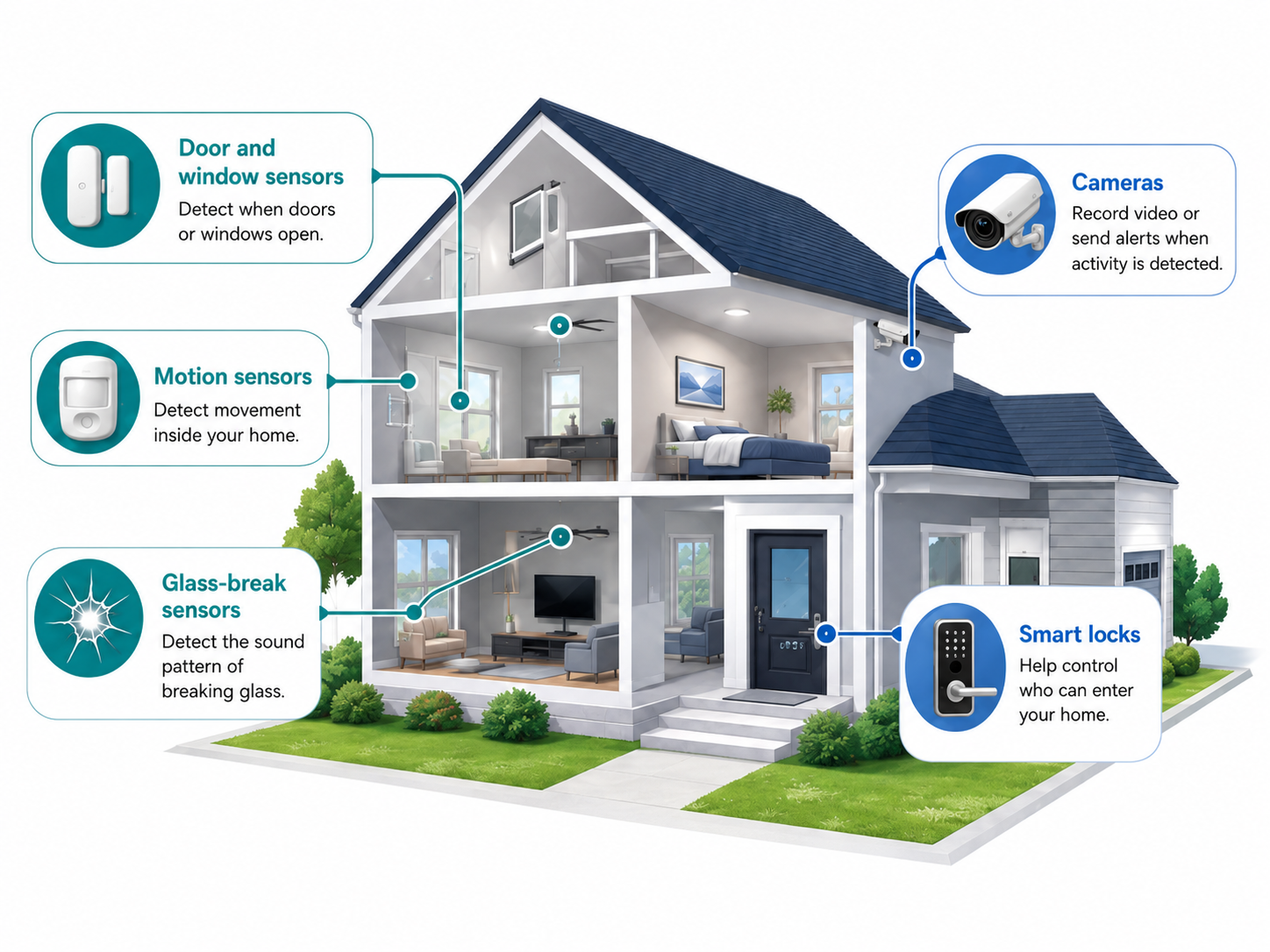
When your system is armed, connected devices watch for activity. Door and window sensors detect openings. Motion sensors detect movement. Glass-break sensors can detect the sound pattern of breaking glass. Cameras can record activity or send alerts based on settings. Smart locks can help control access.
If a sensor is triggered, the system can take several steps. It may sound an alarm, send a mobile alert, notify users, record video, or alert a professional monitoring center.
The exact response depends on your system and monitoring plan.
For example, if you are at work and a door sensor is triggered, your phone may receive an alert. If you use professional monitoring, trained staff can follow the response process tied to your account.
That is one reason residential security systems should be set up with care. Too many alerts can cause people to ignore them. Too few alerts can leave gaps.
The Main Goals of Home Security
Home security essentials usually fall into four simple goals: detect, deter, alert, and respond.
A good system should do all four.
Detect
Detection is the first step.
Sensors help identify activity at doors, windows, hallways, rooms, and other key areas. Cameras can help you see what happened. Environmental sensors can detect smoke, carbon monoxide, water, or temperature changes.
Detection works best when devices are placed where activity matters most.
For apartments, that may mean the main door, balcony door, and central motion path. For houses, that may include exterior doors, ground-level windows, garages, and main living areas.
Deter
A visible security system may help discourage unwanted activity.
Signs, cameras, alarms, smart lighting, and controlled access can make a property look less easy to target. The goal is not to make wild promises. No system can stop every issue.
But clear security measures can make your home less inviting to someone looking for an easy opportunity.
Alert
Alerts help you act faster.
A system may send alerts to your phone, sound a siren, or notify a monitoring center. Alerts can also help you catch smaller issues, such as a door left open, a garage opened late at night, or motion detected while you are away.
Good alerts are useful. Bad alerts are noise.
That is why setup matters. Your system should match your schedule, pets, rooms, and habits.
Respond
Response is what happens after an alert.
You may check a camera, call a neighbor, contact a family member, or cancel a false alarm. With professional monitoring, a monitoring center can follow the response steps connected to your account.
Response planning is often overlooked. It should not be.
Before you need the system, know who receives alerts, what each alert means, and what action should happen next.
Self-Monitoring vs. Professional Monitoring
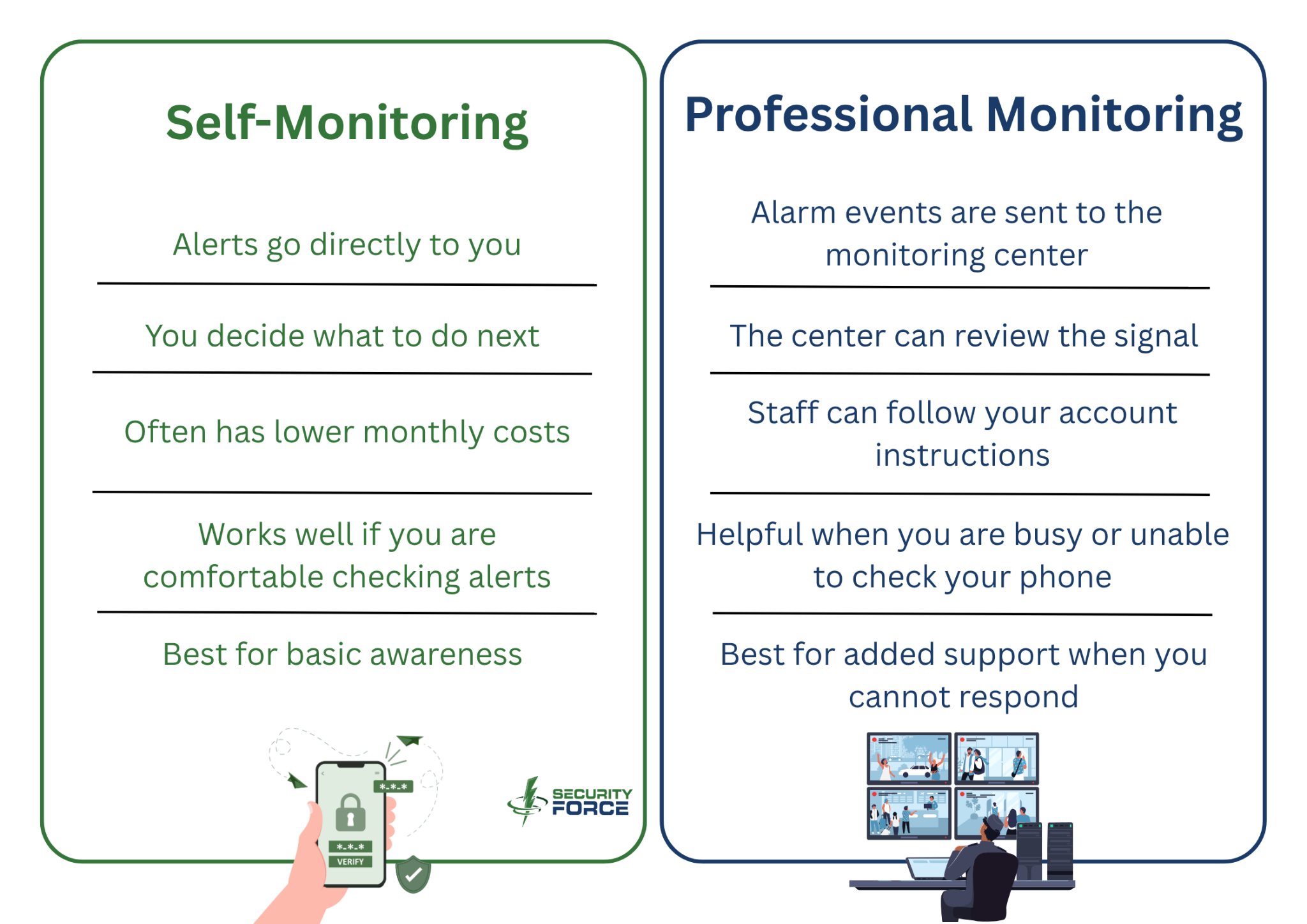
Self-monitoring vs. professional monitoring is one of the biggest choices in home security.
Self-monitoring means alerts go to you. You decide what to do. That can work for people who want lower monthly costs and are comfortable checking alerts.
Professional monitoring adds another layer. When an alarm event occurs, a monitoring center can review the signal and follow the account instructions. That can be helpful when you are asleep, traveling, in a meeting, or unable to check your phone.
Both options have a place.
Self-monitoring may fit someone who wants basic awareness. Professional monitoring may fit someone who wants added support when they cannot respond.
The best choice depends on your risk level, schedule, property type, and budget.
Why Home Security Should Be Customized
Generic security packages can miss how people live.
A camera at the front door may help, but it may not cover a sliding patio door. A motion sensor may help, but it may need placement that accounts for pets. Apartment renters may need a setup that works with lease rules. Homeowners may need more coverage for garages, basements, or detached buildings.
That is why customization matters.
If you are asking how to make my home more secure, start with your layout. Walk through your space and identify main entry points, blind spots, shared access areas, and daily routines.
Then decide what you need to know.
Do you want to know when someone opens the front door? Do you want indoor motion alerts only when you are away? Do you want cameras outside, inside, or both? Do you want professional monitoring?
Those questions lead to better decisions than buying the first kit you see online.
When to Consider a Home Security System
You may want to consider a system if you travel often, work long hours, live alone, have pets at home, keep valuables in your space, or want better awareness after dark.
You may also want a system after moving into a new house or apartment. New routines can make security gaps easier to miss.
For renters, security can be practical and simple. Apartment security may include a smart panel, a door sensor, a motion sensor, mobile alerts, and active monitoring. Security Force may be able to move your system for free within a specified service area, depending on the package and location. Confirm that before purchase.
For homeowners, home security tips often include checking locks, adding lighting, trimming blocked sightlines, using smart access controls, and installing monitored sensors at key entry points.
If you are wondering how to improve home security, start with the basics. Then add technology that gives you better awareness or response.
FAQs about Home Security
These short answers cover the most common questions people ask before choosing a system.